Friday, 4 March 2022

Friday 4th March

A low tide visit saw the Velvet Scoter offshore with 322 Dark-bellied Brent Geese feeding along the beach, four Sanderling on Finger Point and 45 Common Gull, six Red-breasted Merganser and a Greenshank in Shutterton Creek.

Elsewhere single Buzzard and Jackdaw were overhead and six Teal were on the Main Pond. 
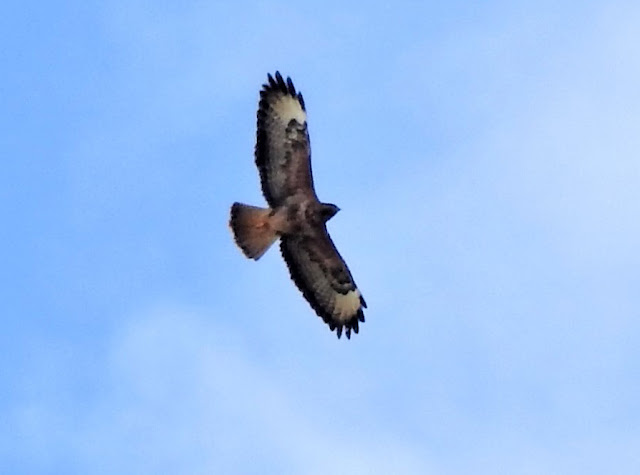
Buzzard - Alan Keatley

Wildlife News: The sunny weather saw a Red Admiral heading north with several Marmalade Hoverfly and Common Spotted Field Syrph Eupeodes luniger also hinting at migration. Also on the wing two early Dull-bellied Blacklet Cheliosia proxima, a good number of Stripe-faced Dronefly Eristalis tenax, a few Hairy-eyed Syrphus Syrphus torvus and the first Green Shieldbug of the year. 
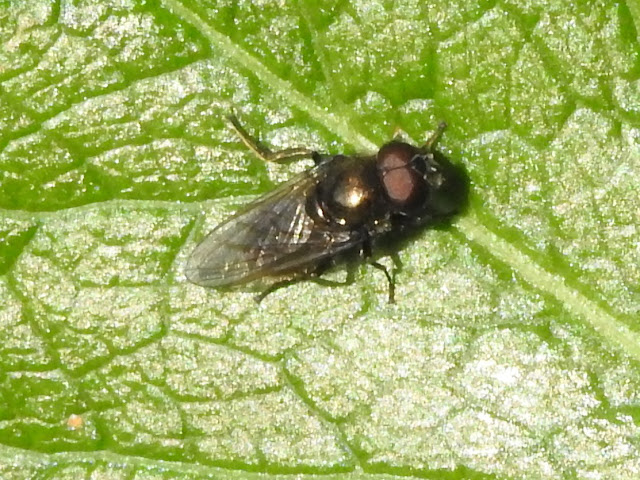
Cheliosia proxima - Alan Keatley
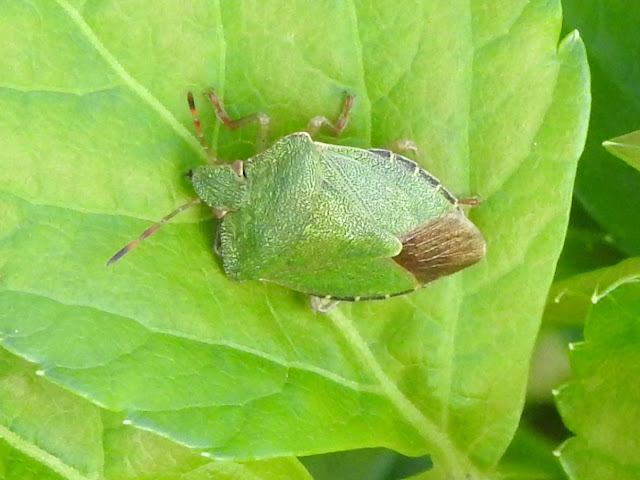
Green Shieldbug - Alan Keatley

Thursday, 3 March 2022

Thursday 3rd March

A single Lesser Redpoll feeding with several Chaffinch in the Entrance Bushes was the first of the year. 


Sunday, 27 February 2022

Sunday 27th February

No sign of the Velvet Scoter in choppy conditions offshore with a Great Northern Diver sheltering in the estuary mouth. Heading south nine Red-throated Diver, 54 Kittiwake, c50 auk sp., 15 Gannet and three Fulmar.

Counts from the estuary included 171 Dark-bellied Brent Geese, 143 Grey and 28 Ringed Plover, 136 Turnstone, 105 Knot, 83 Bar-tailed Godwit, 44 Teal, 39 Shelduck, 26 Redshank, 21 Sanderling, 10 Wigeon, five Red-breasted Merganser, five Lesser Black-backed Gull, two Greenshank and a Pintail. 

Elsewhere at least eight Cirl Bunting on site, a Teal was on the First Pond, a Chiffchaff in the Entrance Bushes and 15 Jackdaw overhead.

Wildlife News: Despite the sunny weather the strong wind kept the temperature down. The first Slender Melanostoma Melanostoma scalare of the year was on the wing with a few Stripe-faced Dronefly Eristalis tenax. The first Stoat sighting of the year was at Langstone Rock, although footprints have been noted on the Dune Ridge. Potential Badger signs were also noted (footprints and foraging) in the Entrance Bushes, there have been no confirmed records for at least five years. 

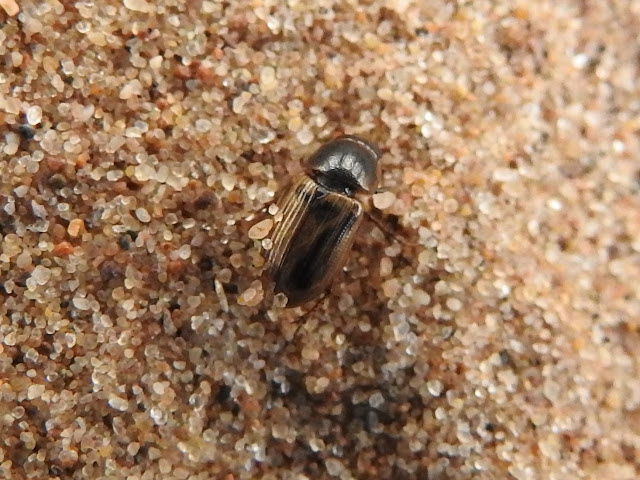
Aphodius prodromus - Alan Keatley

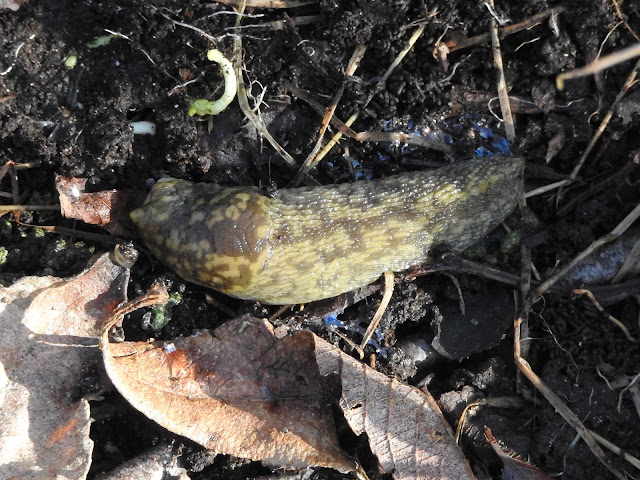
Irish Yellow Slug - Alan Keatley

Saturday, 26 February 2022

Saturday 26th February

The Velvet Scoter remained offshore with some movement south including 196 Kittiwake, 100 auk sp, 25 Common Scoter, 23 Razorbill, 16 Guillemot, 13 Gannet, 12 Common Gull, five Fulmar, three Red-throated Diver and a Great-crested Grebe.

Counts from the estuary included 166 Grey and 21 Ringed Plover, 112 Dark-bellied Brent Geese, 104 Knot, a good count of 94 Turnstone, 82 Bar-tailed Godwit, 55 Teal, 25 Sanderling, 25 Shelduck, 23 Redshank,10 Wigeon, four Red-breasted Merganser, a Greenshank, a Peregrine and a Scandinavian Rock Pipit.

Elsewhere 42 Jackdaw and a Rook were overhead, four Shoveler were on the Main Pond, six Cirl Bunting and a Goldcrest were in the bushes and nine Skylark and a Reed Bunting were on Warren Point. 

Friday, 25 February 2022

Friday 25th February

A bright sunny early spring day saw an early Red Kite head east offshore mid afternoon, with another first for the year, a Stock Dove, was also overhead along with five Raven. 

Elsewhere counts from the estuary included 162 Grey Plover, 134 Knot, 111 Brent Geese, 103 Bar-tailed Godwit, 25 Sanderling and nine Red-breasted Merganser, the Velvet Scoter and two Red-throated Diver offshore and a Kingfisher, a Chiffchaff, six Teal and two Shoveler at the Main Pond. 

Kestrel - Dave Jewell

Wildlife News: The sunshine was appreciated by some early Spring insects, several Honey Bee and Buff-tailed Bumblebee were joined nectaring on Gorse and emerging Alexanders flowers by a Common Dronefly Eristalis tenax, a few Marmalade Hoverfly and at least three Hairy-eyed Syrphus Syrphus torvus.

Syrphus torvus - Alan Keatley

The most anticipated insect was a brief Small Tortoiseshell in Greenland Lake, the welcome first butterfly of the year. 

Salticus scenicus, a Zebra Jumping Spider - Alan Keatley

Sunday, 20 February 2022

Sunday 20th February

The Velvet Scoter was still offshore this morning along with five Red-throated and three Great Northern Diver, 102 Kittiwake, 41 Gannet and eight Great-crested Grebe.

Counts from the estuary included 1460 Dunlin, 309 Oystercatcher, 189 Dark-Bellied Brent Geese, 160 Bar-tailed Godwit, 139 Grey Plover, 123 Common Gull, 110 Knot, 36 Shelduck, 27 Teal, 19 Sanderling, eight Red-breasted Merganser and six Wigeon. 

Elsewhere two Goldcrest and a Chiffchaff were in the bushes, a Water Rail was at the First Pond with four Shoveler and a Kingfisher at the Main Pond.

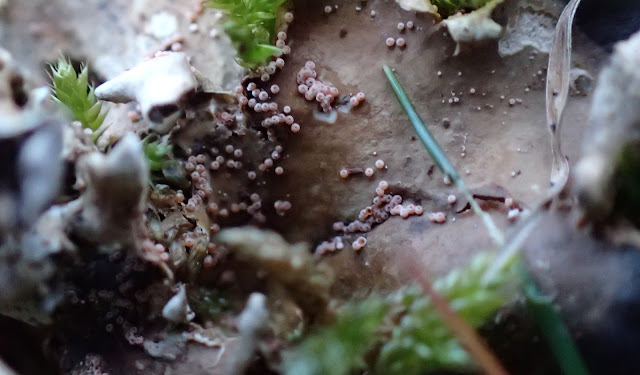
Wildlife News: An afternoon of continuing strong winds and rain saw focus shift to ground level with various fungi, bryophytes and lichens recorded. Scarlet Elfcup provided some much needed colour for the day with Nectriopsis lecanodes a more subtle affair. The Recording Area is one of only five sites in England for this species. 

Scarlet Elfcup - Kevin Rylands

Nectriopsis lecanodes - Kevin Rylands

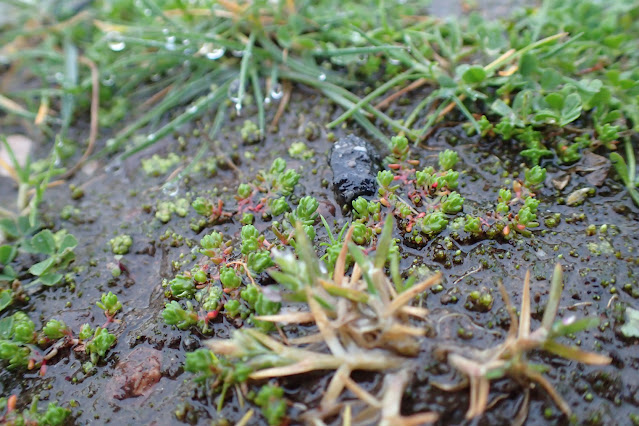
Mossy Stonecrop is emerging around the Car Park and Buffer Zone in bare areas with the nationally rare liverworts Micheli's Balloonwort Sphaerocarpos michelii and Blue Crystalwort Riccia crystallina, the latter was also found at a new site on the Golf Course. 

Blue Crystalwort & Micheli's Balloonwort - Kevin Rylands

Mossy Stonecrop - Kevin Rylands

Insects were few and far between with a Yellow Dung Fly grimly hanging onto a flowering Alexanders and the nationally scarce Lesne's Earwing a surprise daylight find.

Lesne's Earwig - Kevin Rylands

Saturday, 19 February 2022

Saturday 19th February

Very quiet offshore with three Fulmar south the best of little movement, on the sea the Velvet Scoter was still present, with 13 Great-crested Grebe, two Great Northern and a Red-throated Diver.

Counts from the estuary included 815 Dunlin, 208 Dark-bellied and a Pale-bellied Brent Geese, 171 Bar-tailed Godwit, 154 Grey and 25 Ringed Plover, 124 Knot, 83 Common Gull, 41 Shelduck, seven Sanderling and two Greenshank. Off site two Goldeneye (male and female) flew in from Exmouth and landed N of Cockwood Harbour. 

Greenshank - Lee Collins

Elsewhere three Goldcrest were in the bushes, a murmuration of 1250 Starling at the Main Pond attracted a hunting Sparrowhawk, with four Snipe three Shoveler, three Water Rail and singing Little Grebe also present and two Rook overhead hinted at Spring.

Ringing News: The Grey Plover below (BBLB) was ringed at Exminster Marshes in Feb 2020, so has now been returning to the Exe for at least the last three winters. Ringed as an adult it could however have been returning for the last 20 years. 

Grey Plover - Lee Collins

Thursday, 17 February 2022

Thursday 17th February

The calm before the storm, a pleasantly sunny and warm early Spring day. Offshore in flat conditions the immature male Velvet Scoter was still present, with a Great Northern Diver and 11 Great-crested Grebe. 

Elsewhere a Black-necked Grebe, six Red-breasted Merganser and a Greenshank were in the estuary at low tide with a pair of Shoveler, two Little Grebe and a Snipe around the Main Pond.

Snipe - Alan Keatley

Wildlife News: Despite the weather few insects were on the wing, but the first Sand Lizard was reported and Sand Crocus leaves are now up in numbers with Early Meadow-grass conspicuous in the short turf. 

Gorse Weevil Exapion ulicis - Alan Keatley

Wednesday, 16 February 2022

Wednesday 16th February

A quick look at low tide saw over 80 Common Gull on the mudflats amongst the usual waders and wildfowl, with a Scandinavian Rock Pipit in the saltmarsh. 

Sunday, 13 February 2022

Sunday 13th February

WeBS count totals from the estuary included 1400 Dunlin, 1157 Oystercatcher, 364 Dark-bellied and a Pale-bellied Brent Geese, 202 Grey and 29 Ringed Plover, a very good count of 187 Snipe, 148 Bar-tailed Godwit, 136 Knot, 122 Great and six Lesser Black-backed Gull, 100+ Common Gull, 37 Teal, 28 Wigeon, 22 Turnstone, 21 Sanderling and 14 Red-breasted Merganser. Also present single Kingfisher and Peregrine. 

Turnstone - Lee Collins

Offshore an early Manx Shearwater went south with 210 Kittiwake, 159 Gannet, 158 Guillemot, 81 Razorbill, 16 Common Scoter and 12 Fulmar, with the Velvet Scoter still present along with five Great-crested Grebe and four Red-throated Diver.