Wednesday, 31 March 2021

March 2021

The bird hide remains closed and the viewing area outside no longer accessible. All of the reported sightings below were made following Government regulations and guidance. Stay safe and hope to see you all soon. 

The month’s highlight was the brief presence of a White-tailed Eagle on 21st, one of the birds released as part of the Isle of Wight based reintroduction project. The bird, G466, was in the Turkey Oak copse of the Golf Course early morning before being relocated in trees just off site at Cofton, where this image was taken. 

White-tailed Eagle - Lee Collins

An immature female, she had flown along the East Devon coast the previous day, being seen on the pebblebed heaths before roosting in the woodland to the east of Woodbury. After leaving Cofton she travelled a total of 75km that day passing over the Teign Estuary before roosting to the east of Plymouth.

Many thanks to Stephen Egerton-Read from Forestry England for the map and information. 

Other notable sightings included three Whooper Swan which flew out to sea before returning and undertaking a tour of the estuary on the 6th and a Red-legged Partridge on the 30th, just as wild, an Indian Peahen was on the Golf Course on the 17th. Long-staying scarcities included the Treecreeper which remained until the 10th, even singing on occasion, two Coal Tit until the 7th, the Siberian Chiffchaff until the 6th and the Firecrest until the 21st.

Whooper Swan - Ben Lucking

Other site scarcities included a female Tufted Duck on 25-26th, a Jack Snipe on 19-20th, a Golden Plover on the 4th and a Black-tailed Godwit on 27th.

Peak counts from the estuary included 1000+ Dunlin on 1st dropping to 530 on 7th and single figures by the end of the month. Other counts included 330 Oystercatcher, with colour-ringed birds reported back on breeding sites during the month, 290 Dark-bellied and four Pale-bellied Brent Geese, 166 Bar-tailed Godwit, 158 Curlew, 95 Grey Plover, 58 Knot, 58 Turnstone, 35 Redshank, 27 Shelduck, 22 Teal, 17 Sanderling and six Greenshank. With no confirmed sightings all month it seems Herbert the Slavonian Grebe has finally succumbed after 14 years on site. 

Green Woodpecker - Dave Jewell

There was little reported offshore with maxima of six Great Northern and just two Red-throated Diver, the first Manx Shearwater arrived on cue, passing south on the 26th, the first Sandwich Tern was recorded on the 6th with a peak of 18 on 27th. 

Summer migrants started to arrive mid month with the first Wheatear on 17th with a peak of of six on 28th; a White Wagtail on the 18th, a Sand Martin on the 24th, a Willow Warbler on 27th and five Swallow and two Blackcap on 31st. 

Wheatear - Lee Collins

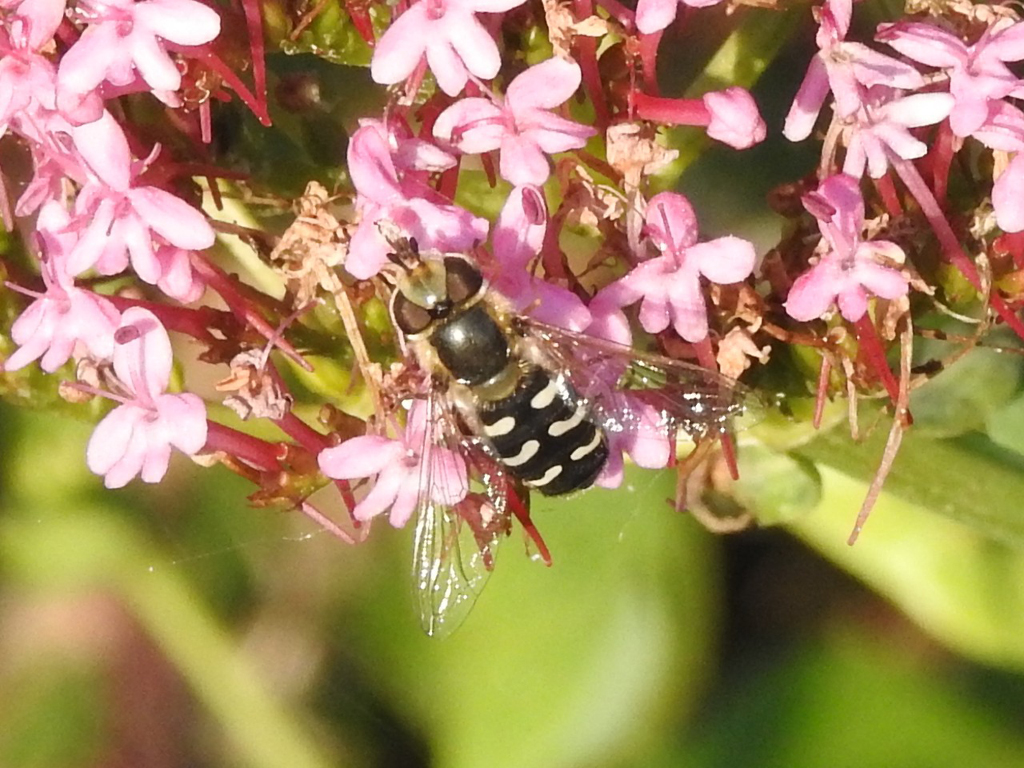
Wildlife News: A Grey Seal was seen on several occasions with unidentified dolphins offshore on the 9th. The spring weather saw the appearance of the first butterflies with Red Admiral, Peacock, Speckled Wood, Comma and two Small Tortoiseshell noted, the latter equalling the number recorded throughout 2020. Bees also emerged with Yellow-legged and Chocolate Mining Bee recorded on the 31st along with Hairy-footed Flower Bee and Red-tailed Bumblebee

Hairy -footed Flower Bee (male) - Alan Keatley

Sand Crocus emerged late month but remained largely closed in dull weather, with Early Forget-me-not, Shepherd's Cress, Common Whitlow Grass, Rue-leaved Saxifrage and Snake's-head Fritillary also in flower. 

Snake's-head Fritillary - Alan Keatley

A total of 656 species had been noted on site by the end of the month including several new species for the Recording Area including Red Gurnard, Water Measurer, Spring Starflower and Grape Hyacinth Anther Smut Antherospora hortensis, the latter new for Devon. 


Red Gurnard - Simon Thurgood

Sunday, 28 February 2021

February 2021

Daily updates will continue to be replaced with summaries during the Covid-19 lockdown, which has meant that fewer records were received than usual. The bird hide remains closed and the viewing area outside no longer accessible. All of the reported sightings below were made following Government regulations and guidance. Stay safe and hope to see you all soon. 

The so called 'Mini beast from the east' didn't get this far west with only two nights below freezing. The month was actually slightly milder and wetter than average with 81mm rain across 14 days and an average temperature of 6.8C.

The month’s highlight was actually late news from 27th January when a Spotted Redshank was just south of Cockwood on the dropping tide, the first Warren record since Nov 2014.

Treecreeper - Jo King

February started with the first Jay since 2018 on the 2nd, two Lesser Redpoll the next day and a Treecreeper on the 8th which remained until at least the 22nd. Also around the scrub a Siberian Chiffchaff (re)appeared on 11-12th with Firecrest reported on four dates, two Coal Tit throughout and a Tawny Owl on 26th.

Siberian Chiffchaff - Lee Collins

There was little reported offshore with maxima of three Great Northern and just a single Red-throated Diver, but an adult Little Gull was off the Point on 14th, with presumably the same bird in the estuary on the 16th.

Little Gull - Lee Collins

In the estuary peak wader counts included 1500 Dunlin, 210 Bar-tailed Godwit, 205 Knot, 198 Grey Plover, 60 Snipe, 42 Redshank, 34 Ringed Plover and five Greenshank. The cold weather didn’t reveal a great deal of movement but an Avocet arrived on the 11th with three the next day, two on 14th and one until the 18th.

As is typical for the time of year wildfowl numbers dropped off with maxima of 249 Dark-bellied Brent Geese, 72 Teal and 17 Wigeon. Three Goldeneye at the start of the month was the winter high for this increasingly scarce duck, but Red-breasted Merganser are in a more precipitous decline, the month’s peak of eight a stark contrast to the site maximum of 204 as recently as Dec 2000.

Scarcer wildfowl included a pair of Pintail on 11th and a single Pale-bellied Brent Geese on 9th. The last reported sighting of Herbert the Slavonian Grebe was on the 8th, moving to Exmouth briefly to escape the strong old easterlies but, as yet, not returning.

As Spring broke through at the end of the month there was hope of early migrants, there was a notable influx of Stonechat on 22nd with at least 13 on site and another small influx on the 28th, when a Red Kite drifted low east making the most of the high pressure.

Ringing News: The wintering Scandinavian Rock Pipit Yellow 632 was last seen around the 17th but was then seen at Sheringham on the north Norfolk coast on the 19th, pausing briefly on its return to Norway. 

Yellow 632 Nov 2019 -  Alan Keatley

Wildlife News: A Grey Seal was seen offshore, and the spring weather saw the appearance of the first Honey Bee and hoverflies on the 28th. 

Scarlet Elf Cup - Lee Collins

Several new species for the Recording Area were noted during the month including two new moths species, Mottled Grey and Coastal Flat-body Agonopterix yeatiana.

Coastal Flat-body


Sunday, 31 January 2021

JANUARY 2021

Daily updates will continue to be replaced with summaries during the Covid-19 lockdown, which has meant that fewer records were received than usual. The bird hide remains closed and the viewing area outside no longer accessible. All of the reported sightings below were made following Government regulations and guidance. Stay safe and hope to see you all soon. 

The month was both colder (5.6C) and wetter (120mm) than average but this was was very much a month of two halves with a minimum temperature of -4C on New Years Day with the maximum of 15.1C on the 28th. Over 25% of the months rainfall was on the 20th (31.4mm).

The year started well with the 13th record of Marsh Tit at the First Pond (no doubt the bird from Shutterton Lane), a Jack Snipe and a very rare midwinter Blackcap amongst at least 82 species recorded on the 1st and nine White-fronted Geese, two Purple Sandpiper and a Woodcock recorded on the 2nd. The 3rd saw Goldeneye and Kingfisher added to the year list but January was otherwise quiet with the annual tally rising to just 99 species by the months end.

Counts from the estuary were generally lower than average throughout the month with peaks of 1800 Dunlin, 710 Oystercatcher, 459 Teal, 326 Dark-bellied Brent Geese, 210 Grey Plover, 206 Knot, 181 Bar-tailed Godwit, 117 Curlew, 110 Common Gull on 29th, 109 Shelduck, 102 Wigeon, 100 Snipe - above average count, 50 Redshank, 33 Ringed Plover, 30 Sanderling, 20 Turnstone, seven Greenshank and the Slavonian Grebe throughout. A peak of just 13 Red-breasted Merganser was barely 10% of the numbers recorded only a few years ago. 

Scarcer species included the first two Mediterranean Gull late month, singles of Golden Plover on 6th & 31st, Black-tailed Godwit on 22nd, Pale-bellied Brent Goose on 24th and Lapwing on 31st.

Offshore a good total of 86 Great-crested Grebe, with 14 Red-throated and three Great Northern Diver, but Common Scoter were largely absent, with two Eider only present on 17th. A pale phase Pomarine Skua on 15th was presumably one of the wintering birds from Torbay.

A couple of Firecrest were recorded on several dates early in the month with two Coal Tit throughout, but the Siberian Chiffchaff was last seen on the 6th. At least 12 Cirl Bunting are wintering almost outnumbering Linnet which peaked at just 14, hopefully numbers will pick up before the breeding season. A pair of Mistle Thrush on the Golf course late month is a positive sign for this early breeder with trilling Little Grebe and drumming Great-spotted Woodpecker showing Spring is just around the corner. 

Tuesday, 5 January 2021

Wildlife Review 2020: Flies

Hoverflies

A total of 43 species of hoverfly were recorded compared with 54 seen in 2019. Several regular species of the genus Cheilosia and Platycheirus, that are mostly prevalent in Spring, were not seen this year.

The first hoverfly of the year was a Common Dronefly Eristalis tenax in February, followed by Tapered and Plain-faced Dronefly Eristalis pertinax arbustorumMarmalade Hoverfly Episyrphus balteatus and Platycheirus scutatus by early March.

Some hoverflies are highly migratory and numbers can be noticeably boosted by influxes. On 13 June hundreds of Marmalade Hoverfly were on site with lesser numbers of White-clubbed Hoverfly Scaeva pyrastri. By mid August other migrant hoverflies such as Large Tiger Hoverfly Helophilus trivittatus and Syritta pipiens had begun to arrive, sharing Water Mint and Common Fleabane with Batman Hoverfly Myathropa florea, Hornet Hoverfly Volucella zonaria and Giant Pied Hoverfly Volucella pellucens

White-clubbed Hoverfly - Alan Keatley

Other nectaring hoverflies seen at this time included Common Tubetail Sphaerophoria scripta, Humming Syrphus Syrphus ribesii, Tiger Hoverfly Helophilus pendulus and Stripe-faced Dronefly Eristalis nemorum.

Common Tubetail - Alan Keatley

Only one new species was recorded this year, Rural Bulbfly Eumerus strigatus on 12 September. Although there was a lack of new species, several hoverflies confirmed their continuing presence following their first occurrence in 2019. 

These included Hook-banded Wasp Hoverfly Chrysotoxum festivum, Common Thistle Cheilosia Cheilosia proxima and Parsley Cheilosia Cheilosia pagana in June,  Broad-banded Epistrophe Epistrophe grossulariae and Golden-tailed Hoverfly Xylota sylvarum in July, Lesser Hornet Hoverfly Volucella inanis in August and Yellow-barred Peat Hoverfly Sericomyia silentis in September.

Golden-tailed Hoverfly - Alan Keatley

Throughout October hoverflies species started to dwindle, although Common Dronefly were still plentiful on bramble and ivy until the end of the month. By November hoverfly numbers had dropped off considerably with just single sightings of Melanostoma scalare on 19th, Common Spotted Field Syrph Eupeodes luniger and Humming Syrphus on 21st, and Marmalade Hoverfly on 26th. The last hoverfly of 2020 was a Glass-winged Syrphus Syrphus vitripennis on 19th December.

Marmalade Hoverfly - Alan Keatley

Dawlish Warren: Hoverflies


Other flies

Including one hoverfly, 11 fly species were added to the Warren list in 2020 bringing the overall total to 645 species. 

The first new fly of the year was the cranefly Cylindrotoma distinctissima on 20 June. Less obvious, but still new for site were gall midges Contarinia hyperici (St John's-wort), Cystophora sonchi (sow-thistles), Jaaplella schmidti (plantains) and the leaf miners Chromatomyia ramosa (Teasel), Aulgromyza heringii (Ash) and Phytomyza agromyzina (Dogwood) all given away by their larval stages on specific plants. The other new species included the smart Looped Flutter-fly Palloptera muliebris in the Cuckoo's Nest on 27 August.

Prior to this year there were only three records of the migratory Locust Blowfly Stomorhina lunata on site, but between 1-22 October there were a further five individuals. The occurrence of this North African vagrant coincided with strong southerly winds.

Locust Blowfly - Alan Keatley

A cross section of more regular species this year included White-tipped Semaphore Fly Poecilobothrus nobilitatusCoastal Silver Stiletto Acrosathe annulataMarsh Snipefly Rhagio tringariusField Buff Snail-killer Tetanoceta elataSlender-striped Robberfly Leptogaster cylindrica, the soldierfly Black-horned Gem Microchrysa politaFour-banded Bee-grabber Conops quadrifasciatus and the peculiar looking ladybird mimic, Graphomya maculata.

Field Buff Snail-killer - Alan Keatley

Monday, 4 January 2021

Wildlife Review 2020: Bees & Wasps

A total of 32 bee species were seen during the year, with many of the usual Spring species missed. The year started well with a winter active Buff-tailed Bumblebee on 1 January and a very “early” Early Bumblebee queen on 15 January both nectaring on Hebe. A Trimmer’s Mining Bee Andrena trimmerana discovered on 12 March, was the first of six new bee species for the Warren in 2020.

Buff-tailed Bumblebee - Alan Keatley

Spring species that were recorded included Bronze Furrow Bee Halictus tumulorum, Grey-patched Mining Bee Andrena nitida, Marsham’s Nomada marshamella, Painted N.fucata and Gooden’s N.goodeniana Nomad Bees. Five further species of bumblebee were recorded; Garden, Red-tailed, Common Carder, Tree and Heath, the latter a welcome return after a blank in 2019.

Coastal Leafcutter - Alan Keatley

The first Yellow-legged Mining Bee Andrena flavipes was eventually recorded on 19 May, with Water-dropwort Mining Bee A. ampla on 21 May, and Sandpit Mining Bee A. barbilabris and Coastal Leafcutter Megachile maritima on 4 June. The first of many Silvery Leafcutter Megachile leachella were on the wing from 28 May, evidence of their handiwork was evident on favoured Birch saplings and almost every Bramble flower seemed occupied. 

During the Summer new species continued to emerge including Green-eyed Flower Bee Anthophora bimaculata on 13 June, Large Sharp-tailed Bee Coelioxys conoidea on 20 June, Pantaloon Bee Dasypoda hirtipes on 18 July, and White-zoned Furrow Bee Lasioglossum leucozonium on 22 August. The nationally uncommon and localised Black Mining Bee A,pilipes was found on 29 August. Initially found on meadow flowers the first male Ivy Bee Colletes hederae were early on 1 September before moving to Ivy with the emergence of females.

Large Sharp-tailed Bee - Alan Keatley

Several locally common species were first discovered on site this year, filling obvious gaps in the Warren list. With some as close as The Maer at Exmouth is wasn’t a surprise that they were eventually recorded at the Warren. These include Common Mini-miner Andrena minutula on 13 June, Common Yellow-faced Bee Hylaeus communis on 20 June, and later in September, a Bare-saddled Colletes Colletes similis on 3rd, Brown-footed Leafcutter Megachile versicolor  and Common Furrow Bee Lasioglossum calceatum on 10th and Orange-legged Furrow Bee Halictus rubicundus on 12th.

Common Yellow-faced Bee - Alan Keatley

Wasps

Wasps form a very large and diverse group of species. Over the years over 150 species have been recorded at Dawlish Warren, in the past many of these would have been identified by collecting specimens. Recent records are by sight alone, so only the most recognisable can be identified to species level.

This year 33 species were recorded, out of these six were new for site. The least expected newcomer was the ichneumon wasp Callajoppa cirrogaster seen 16 July. One of the largest and most spectacular looking British ichneumon, it is a parasitic wasp of hawk-moth caterpillars. Other ichneumon wasps found this year were Pimpla rufipes, Apechthis compunctor and Enicospilus ramidulus.

Callajoppa cirrogaster - Alan Keatley

The sandy habitat at the Warren supports a good number of digger wasps, and as usual a variety of species were found this year. Digger wasps appear from mid May and can be seen nectaring on flowers, especially umbellifers. The following were seen this year: Common Spiny Digger Wasp Oxybelus uniglumis, Astata boops, Slender-bodied Digger Wasp Crabro cribrarius, Sand-tailed Digger Wasp Cerceris anenaria, Ornate-tailed Digger Wasp C. rybyensis, Four-banded Digger Wasp Gorytes quadrifasciatus, Ectemnius continuus, Bee-wolf Philanthus triangulum, Crossocerus quadrimaculatus, C. podragricus and Crossocerus megacephalus on Warren Point. This last species however avoids sand, burrowing into soft rotting wood to store captured flies for its larvae.

Crossocerus megacephalus - Alan Keatley

A few spider-hunting wasps species can be found patrolling at ground level over open areas. Many are difficult to identify, one that can be identified is Leaden Spider Wasp Pompilus cinereus. Another easily identified species Red-legged Spider Wasp Episyron rufipes, is a frequent visitor to umbellifers, the first of the year seen on 19 May.

Leaden Spider Wasp - Alan Keatley

Other solitary and parasitic wasps recorded included Gasteruption jaculator, a ruby-tailed wasp Chrysis ignita, Ancistrocerus nigricornis and A. trifasciatus with the common and conspicuous Red-banded Sand Wasp Ammophila sabulosa frequent in the dunes.

The plant galls of ten gall wasp species were recorded, amongst these were two new species, both found on oak, Striped Pea Gall Wasp Cynips longiventris and Neuroterus saliens.

Social wasps had a good year, both Common and German Wasp were numerous with several nests scattered around the site. Both species were active until on ivy until mid November, with a final Common Wasp on 19th December. A welcome record was Hornet, with two October records of this, less than annual, impressive social wasp.

Hornet - Alan Keatley


Sunday, 3 January 2021

Sunday 3rd January

An afternoon visit on the dropping tide saw four Red-throated and two Great Northern Diver offshore with 22 Great-crested Grebe whilst 50+ Gannet fished distantly in the bay. Just eight Turnstone, 18 Brent Geese and a Grey Heron at Langstone Rock.

In the estuary the Slavonian Grebe was with a Little and two Great-crested Grebe, a female Goldeneye was new for the year as was a Kingfisher fishing inside the wreck, sheltered from the cold northerly wind.

Wildlife Review 2020: Plants, Mosses, Lichens & Fungi

Plants

The traditional BSBI New Year Plant hunt saw a total of 32 species in flower including Sweet Violet and Summer Snowflake, a lower total than previous years, but recent mowing reduced the number of flowering plants available. Two species were added to the Recording Area flora during the year, with Water-purslane found near Funder Park and a self-seeded Fuschia discovered growing on the Railway Embankment.

Early Meadowgrass - Alan Keatley

Several plants were rediscovered on site with the Near Threatened Common Cudweed found growing alongside the Water-purslane, Royal Fern making a surprise appearance on the Golf Course, Good King Henry put in one of its sporadic showings and the Altar Lily flowered again in the Entrance Bushes. A second plant of Creeping Willow was also discovered, growing in the slack near the Visitor Centre.

Although not monitored, the Sand Crocus again had an exceptional year, with the rested fairways in particular putting on a good show. The population by the 7th fairway was however damaged by illegal metal detectorists.

Sand Crocus

Another short turf specialist, Mossy Stonecrop, increased in the Buffer Zone, but new fencing has removed the path were this has become established, so the lack trampling may remove its niche and encourage other species to outcompete this nationally scarce plant.

Orchids again put on a late summer display with carpets of Southern Marsh Orchid and Marsh Helleborine in wetter areas. The Bee and Pyramidal Orchid colonies again increased and the lone Green-winged Orchid again flowered in Greenland Lake and further plants discovered at a new location on the Golf Course. The last orchid of the year, Autumn Ladies-tresses, appeared early in August, once again overlapping with Marsh Helleborine, but numbers were much lower this year, often limited to wetter areas. The sea defence works aim to return Greenland Lake back to a tidal creek, with the vast majority of these will disappearing under the tide so enjoy them whilst you can.

Pyramidal Orchid - Alan Keatley

On Warren Point the nationally rare Sea Daffodil was again in bloom, one of just three locations in the UK.  Also present Orange-peel Clematis but the long established Chinese Tea Plant seems to have been lost. The accelerating erosion removed much of the Desert, an area of Warren Point that had formed since 1992, only a couple of Sea Holly plants remain into the New Year.

Sea Holly & Sea Spurge 

Dawlish Warren Flora

Mosses & Liverworts

Both Micheli's Balloonwort Sphaerocarpos michelii and Blue Crystalwort Riccia crystallina were again recorded, both also being found in new locations. The Recording Area is one of two Devon locations for these nationally rare liverworts, with the other just the mainland side of the Railway Tunnel, there the populations are however in decline.

Blue Crystalwort - Andrew Cunningham

Weedy Frillwort Fossombronia incurva, another nationally rare liverwort, was discovered at a new location on the Golf Course.

Lichens

At total of 17 new species were noted, the majority of which came from the previously unrecorded seawall. These included Caloplaca microthallina, Porpidia macrocarpa, Protoblastenia rupestris and Verrucaria calciseda.

Elsewhere Cladonia ramulosa was discovered on Warren Point, where two new, but, small patches of Peltigera neckeri were also found, other colonies however were lost to the continuing erosion.

Peltigera neckeri

Fungi

It was an exceptional year for fungi, the warm and wet autumn providing ideal fruiting conditions for waxcaps in particular. In total 44 new species were recorded, taking the Recording Area tally to 675 species, but with 20,000 in the UK there are still plenty to discover!

The Golf Course semi rough held the majority of the interesting discoveries with six species of waxcap including Snowy, Parrot & Cedarwood, three earthtongues, all new to site, and several clubs and corals. The largest area of Earthtongues was however near the new seawall behind the Visitor Centre, with several hundred on show in late November.

Earth-tongue Geoglossum cookeianum

Conversely the numbers of fungi around Greenland Lake continue to decline, with very few Parasol or Blackening Waxcap and again no Winter Stalk Puffball. Has the relatively recent introduction of glyphosate to this area negatively impacted on the fungi, as it does with other soil biota?

New fungi recorded during the year included some excellently named species such as Couscous Crust Aegerita candida, Lemon Disco Bisporella citrina, Steely Bonnet Mycena pseudocorticolaCamembert Brittlegill Russula amoenolens, Veined Mossear Rimbachia bryophila and Redlead Roundhead Leratiomyces ceres.

Steely Bonnet

Another good finds included the Bird's Nest Fungi Crucibulum laeve, Plums & Custard Tricholomopsis rutilans, the first record for 33 years, several giant Agaricus urinascens, a rarely recorded mildew Hypomyces papulasporae on the abundance of earthtongues and Xylaria cinerea, a rare candlestick fungus.

Plums & Custard - Alan Keatley

Saturday, 2 January 2021

Saturday 2nd January

Highlights reported today only included a flock of nine White-fronted Geese that flew in off the sea and headed north just before 9 am, the first record since Oct 2018. Two Purple Sandpiper were feeding below Langstone Rock, with one still present late afternoon, and a Woodcock was near the Main Pond.