Tuesday, 23 July 2024

Tuesday 23rd July

No sign of the Roseate Tern today but counts from the estuary included 450 Oystercatcher, 273 Curlew, 114 Redshank, 42 Whimbrel, 23 Dunlin, 13 Ringed Plover, 12 Greenshank and nine Sanderling.

Other Wildlife: With Water Mint and Common Fleabane coming into flower insects have an improved range of nectar sources with solitary bees, wasps, bugs and hoverflies all taking advantage. These included Hairy Hylaeus hyalinatus and Common Yellow-faced Bee H. communis, Green Furrow Bee Lasioglossum morio, Batman Hoverfly Myathropa florea, Parsley Blacklet Cheilosia pagana, Hairy-backed Boxhead Wasp Crossocerus megacephalus and Gasteruption jaculator.

Hairy Yellow-faced Bee Hylaeus hyalinatus - Alan Keatley

Hairy-backed Boxhead Wasp Crossocerus megacephalus - Alan Keatley

More selective feeders included several Burdock Gall Fly Terellia tussilaginis. 

Burdock Gall Fly Terellia tussilaginis - Alan Keatley

Cryptocephalus fulvus - Alan Keatley. Beetle species 406 for the Recording Area

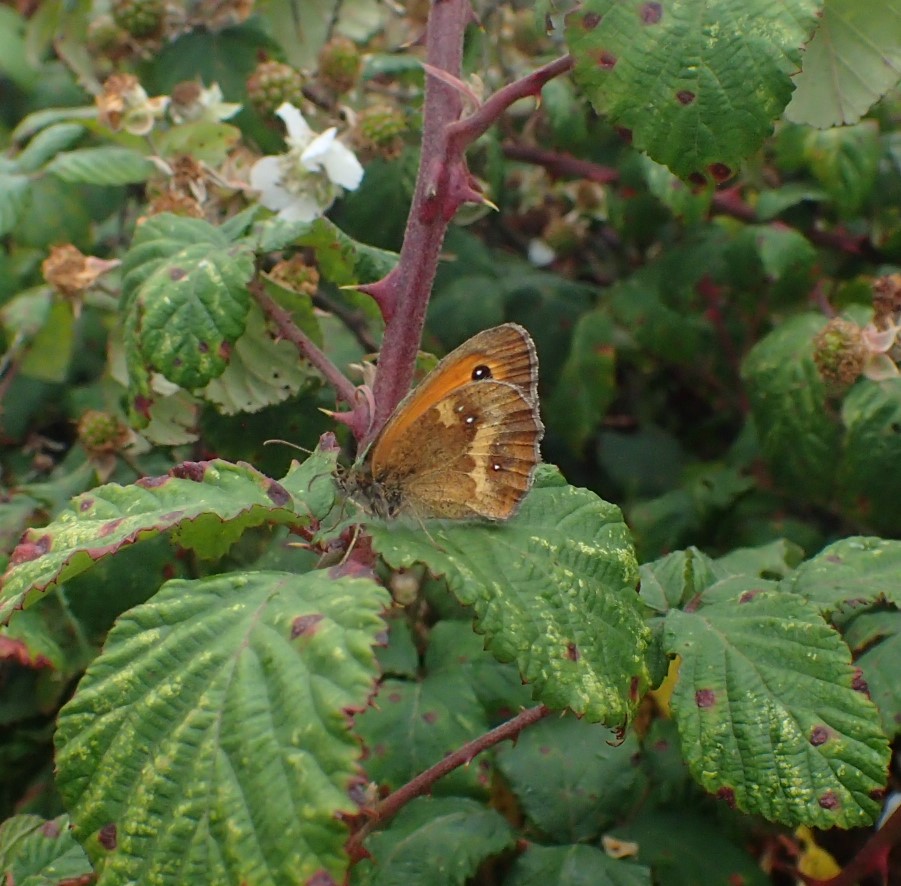
A welcome increase in butterfly numbers with eight species on the wing, including new generation Common Blue and Speckled Wood. A total of five dragonfly species included Black-tailed Skimmer and Golden-ringed Dragonfly. 

Golden-ringed Dragonfly - Alan Keatley

Monday, 22 July 2024

Monday 22nd July

Many of the roosting Sandwich Tern flew past Langstone Rock early morning with 82 heading SW in the first 1hr 30mins after dawn, 72 were still in the estuary mid morning with five Common and the Roseate Tern. The latter dropped into The Bight for a brief stay just before 10.30 not being seen again until it returned at 19.30.

Also in the estuary 352 Curlew, 125 Redshank, 54 Whimbrel, 51 Dunlin, 14 Greenshank, six Eider, four Black and two Bar-tailed Godwit, three Common Sandpiper, two Ringed Plover and a Sanderling. At least 25 Mediterranean Gull, including six juveniles, were split between the estuary and passing SW offshore. 

Elsewhere a Kingfisher was at the Main Pond and offshore a dark phase immature Pomarine Skua flew SW early morning with a dark phase Arctic Skua and a Red-throated Diver lingering.

Sunday, 21 July 2024

Sunday 21st July

After no sign all day the Roseate Tern reappeared in The Bight just after 19.30 before again departing upriver half an hour later. Also around The Bight today at least 124 Sandwich, three Common and an Arctic Tern. Plenty of birds seemed to be carrying fish although birds are mostly foraging in the estuary.

Other counts over high tide included 549 Oystercatcher, 261 Curlew, 127 Redshank, 55 Whimbrel, 19 Mediterranean and a juvenile Yellow-legged Gull, 15 Dunlin, 13 Greenshank, six Sanderling, six Eider, five Ringed Plover, two Knot and single Bar-tailed Godwit and Turnstone.

Elsewhere watching over the morning tide a 2cy male Peregrine was on Finger Point, a Snipe flew in off the sea and eight Common Scoter, six Manx Shearwater and a Great Northern Diver were offshore.

Other Wildlife: A Bright Wave was an unexpected discovery in the dunes, the first Warren and just the fourth Devon record for this rare migrant and Kent resident. One in Dorset last week was just the sixth county record. Unfortunately this one eluded both the focus and a pot!

Bright Wave - Kevin Rylands

Saturday, 20 July 2024

Saturday 20th July

A Roseate Tern was again the day's highlight, arriving in The Bight just after 19.30 and lingering for just half an hour. The state of moult and bill colouring revealed this to be the third brief staying individual in the last four days.

Sandwich Tern numbers peaked at 142 on the evening high tide, double the number present in the morning, with seven Common Tern including, two juveniles, in the morning and just four later in the day. 

Other counts from the estuary included 261 Curlew, 134 Redshank, 55 Whimbrel, 52 Dunlin, 29 Turnstone, 24 Mediterranean and a juvenile Yellow-legged Gull, 16 Greenshank, 12 Ringed Plover, nine Sanderling, six Eider, three Common Sandpiper and single Bar-tailed Godwit and Knot.

Greenshank - Lee Collins

Elsewhere 25 Common Scoter and five Arctic Skua were offshore and a big movement of 158 Swift flew E early evening ahead of rain.

Ringing News: A Polish Black-headed Gull was in The Bight, TNPH was ringed as an adult at a colony in NE Poland in May 2020 and has with the exception of 2022 been recorded here each July since then.

Black-headed Gull - Lee Collins

Friday, 19 July 2024

Friday 19th July

No sign of any of the scarce terns today but the evening tide still saw at least 120 Sandwich (54 juvs) and four Common Tern coming and going. Also in the estuary 108 Redshank, 53 Dunlin, 16 Mediterranean Gull, nine Greenshank, seven Sanderling, the six Eider, two Ringed Plover and a breeding plumaged red Knot.

Other Wildlife: Single Golden-ringed Dragonfly and Red Admiral were on the Golf Course.

Dune Jumper Marpissa nivoyi - Kevin Rylands

Golden-brown Tubic (Brown Bark Moth) Crassa unitella - Kevin Rylands

Thursday, 18 July 2024

Thursday 18th July

An adult Roseate Tern was again in The Bight on the evening tide, this bird was however unringed, so a second individual in two days. also present 136 Sandwich, 12 Common, including the first juvenile, and single Arctic and Little Tern.

Little Tern - Lee Collins

Wader counts included 137 Redshank, 43 Dunlin, 29 Whimbrel, 13 Greenshank, five Sanderling and a Bar-tailed Godwit with 12 Mediterranean Gull and the six Eider also in the estuary.

Elsewhere the second Marsh Harrier of the year was picked up distantly offshore flying NNE before eventually making landfall over Exmouth just after 6.15am; 16 Common Scoter, six Great Northern and a Red-throated Diver were on the sea, two Sand Martin were overhead and the first Wheatear of the autumn was on the Golf Course.

Other Wildlife: Ideal weather for observing summer insects - warm, sunny with a slight breeze. Leading the way again were solitary wasps with Four-banded Digger Wasp Gorytes quadrifasciatus and Dull Cuckoo Wasp Hedychridium roseum nectaring on Wild Carrot. The Shieldbug Digger Wasp Astata boops, host to the cuckoo wasp, was watched taking a captured shieldbug back to its nest burrow. 

Four-banded Digger Wasp Gorytes quadrifasciatus - Alan Keatley

Dull Cuckoo Wasp Hedychridium roseum - Alan Keatley

Shieldbug Digger Wasp Astata boops - Alan Keatley

Also nectaring, the hoverflies Dark-winged Chrysogaster C. solstitialis and Hornet Plumehorn Volucella zonaria and the summer generation of Yellow-legged Andrena flavipes and Short-fringed Mining Bee A. dorsata and with a Waisted Beegrabber Physocephala rufipes watching on.

Short-fringed Mining Bee Andrena dorsata - Alan Keatley

The warm weather favoured orthoptera were at least two Roesel's Bush-cricket stridulating in the Back Meadow, with several Great Green Bush-cricket and numerous Meadow Grasshopper in the long grass and Lesser Cockroach amongst the Marram.

Meadow Grasshopper - Alan Keatley

At least half a dozen Silver Y were disturbed from path sides with a Golden-ringed Dragonfly also on site.


Wednesday, 17 July 2024

Wednesday 17th July

The long awaited first Roseate Tern of the year, an adult, roosted in The Bight on the dropping evening tide, joining a minimum of 120 Sandwich and eight Common Tern. Also in the estuary 15 Dunlin, four Ringed Plover and four Common Sandpiper.

Roseate Tern - Lee Collins

Elsewhere six Common Sandpiper were around Langstone Rock early morning, with an Arctic Skua, six Great Northern, an immature Red-throated and a diver sp offshore. On site the first autumn Garden Warbler and a Willow Warbler.

Year list addition:

158. Roseate Tern


Tuesday, 16 July 2024

Tuesday 16th July

A Cuckoo was on Warren Point and at least 70 Sandwich Tern and six Mediterranean Gull were alternating between roosting in the estuary or feeding offshore.

Other Wildlife: Not surprisingly for mid-July solitary wasps were to the fore. Leading the way was the ant-like dryinid wasp Gonatopes clavipes, found under driftwood on Warren Point. 

Gonatopes clavipes - Alan Keatley

Other species included the first Little Mason-wasp Microdynerus exilis and Mournful Wasp Pemphredon lugubris of the year, Three-banded Mason-wasp Ancistrocerus trifasciatus, Slender-bodied Digger Wasp Crabro cribrarius and Red-legged Spider Wasp Episyron rufipes.

Little Mason-wasp Microdynerus exilis - Alan Keatley

Three-banded Mason-wasp Ancistrocerus trifasciatus - Alan Keatley

Red-legged Spider Wasp Episyron rufipes - Alan Keatley

Bees included the first Coastal Leafcutter Megachile maritima of 2024 and the first of the summer generation of Painted Nomad Bee Nomada furcata. Bugs included a couple of Ant Damsel Bug Himacerus mirmicoides on umbellifers and on the coastal mirid Lygus maritimus in The Bight. After a lone early summer record, several Common Darter were also making an appearance.

Painted Nomad Bee Nomada furcata - Alan Keatley

Ant Damsel Bug Himacerus mirmicoides - Alan Keatley

Sunday, 14 July 2024

Sunday 14th July

Counts from the estuary included 419 Oystercatcher, with ringed birds returning to winter on most days, 289 Curlew, 107 Sandwich Tern including 44 juveniles, 93 Redshank, 46 Whimbrel, 21 Dunlin, 11 Mediterranean Gull, 10 Greenshank, the six Eider, five Common Sandpiper, three Ringed Plover, two Common Tern and a Bar-tailed Godwit. 

Elsewhere 34+ Common Scoter and two Great Northern Diver were offshore and on site c95 Starling, c70 Linnet and single Green and Great Spotted Woodpecker.

Other Wildlife: A Golden-ringed Dragonfly on Warren Point was one of six Odonata species recorded today along with nine species of butterfly, including single Painted Lady and Small Tortoiseshell. Day-flying moths included Six-spot Burnet, Yellow Shell and a couple of Silver Y.


Poplar Hawkmoth - Kevin Rylands

Dasineura rosae gall - Kevin Rylands

Saturday, 13 July 2024

Saturday 13th July

A moulting ♂ Tufted Duck in the estuary was unexpected, increased wader and tern counts pointed to other new arrivals. Totals included 312 Curlew, 105 Redshank, 39 Dunlin, 32 Whimbrel, 24 Mediterranean Gull, nine Greenshank, seven Ringed Plover, the six Eider, five Common Sandpiper, two Bar-tailed Godwit, a Sanderling and, on Bull Hill, a juvenile Yellow-legged Gull. 

The terns were commuting between The Bight and offshore with minimum counts of 176 Sandwich (54 juvs) and three Common Tern. Also offshore a second juvenile Yellow-legged Gull, 23 Common Scoter, three Great Northern Diver and a Great Crested Grebe. 

Elsewhere a Coal Tit was in the Entrance Bushes, single Lesser Whitethroat and Willow Warbler were around Dead Dolphin Wood, 18 Swallow and 10 Sand Martin flew through and a sixth Common Sandpiper was at Langstone Rock. 

Other Wildlife: Despite the overcast conditions and occasional showers a few butterflies were on the wing including singles of Brown Argus, Marbled White, Painted Lady and Small Tortoiseshell.

Gatekeeper - Kevin Rylands