Tuesday, 10 September 2024

Tuesday 10th September

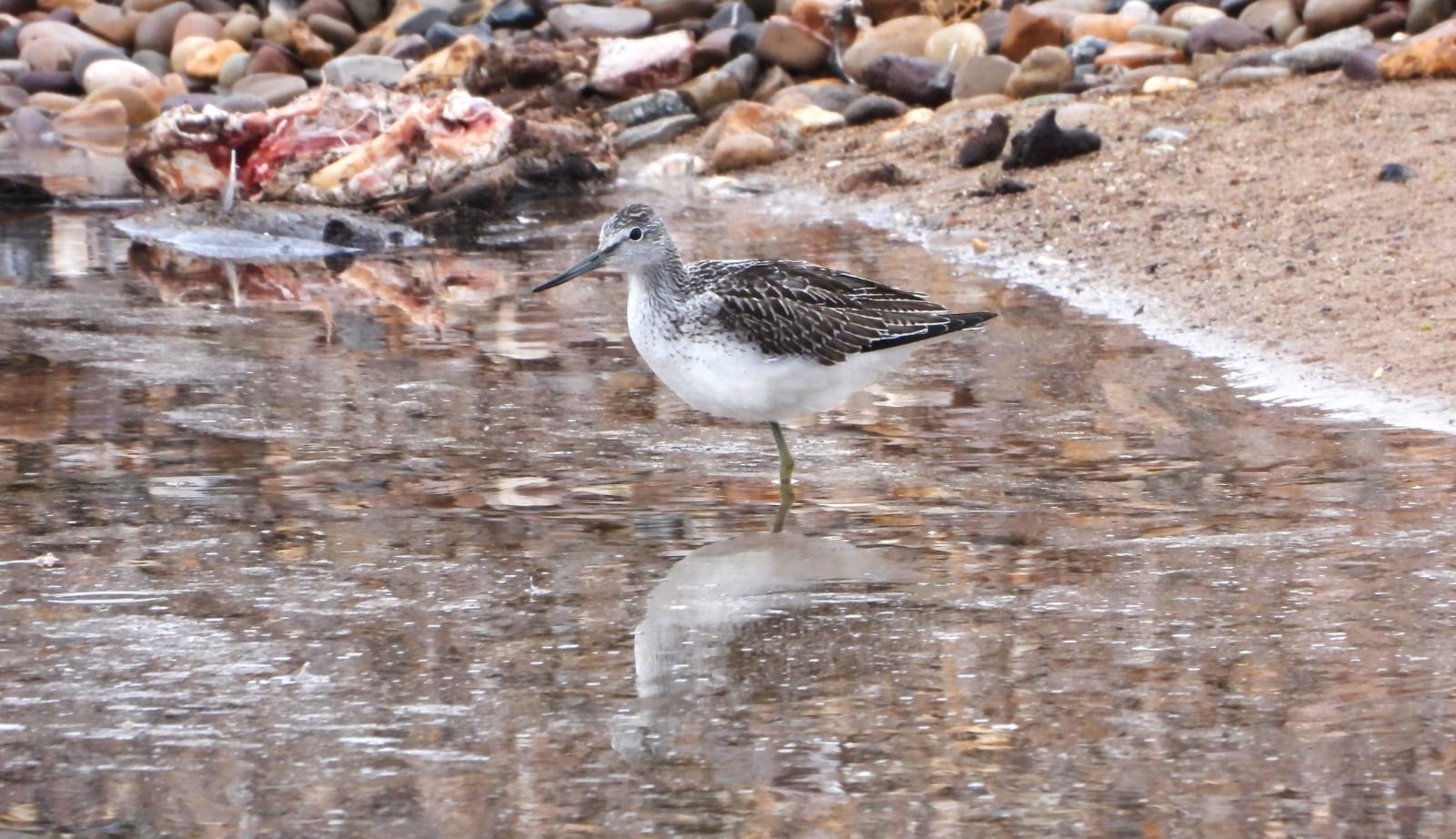
A Lapwing in the estuary was just the third record of the year, the earliest arrival since 2019. Also present 94 Ringed Plover, 93 Dunlin, 79 Teal, 24 Sanderling, 20 Greenshank, 13 Mediterranean Gull, six Eider, five Turnstone, a Spotted Redshank, a juvenile Curlew Sandpiper and an adult and juvenile Osprey, with a couple of hours between sightings.

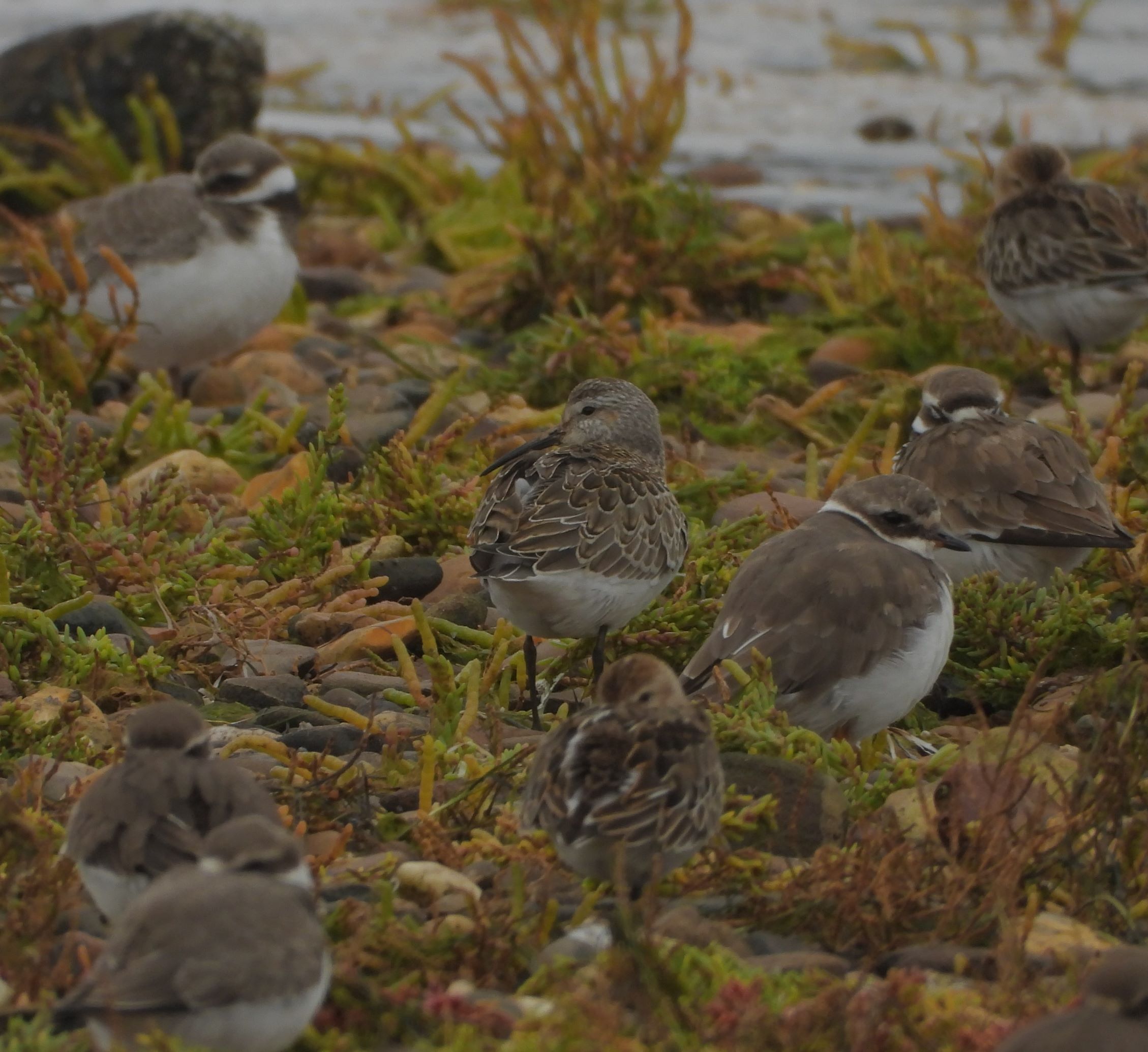
Ringed Plover, darker northern races are now moving through - Lee Collins

Sanderling - Dean Hall

Curlew Sandpiper - Dean Hall

Curlew Sandpiper - Dave Jewell

Elsewhere migrants included single Wheatear and Whinchat and a few grounded Meadow Pipit, with two Great Northern Diver offshore and 11 Common Tern out of the estuary at dawn, five lingering Arctic Skua and a Pomarine Skua heading S.

Other Wildlife: Insect numbers were down compared to yesterday in the overcast conditions with fewer dragonflies and butterflies, although four Red Admiral and two Painted Lady were recorded.

Diptera species included Pied Volucella pellucens and Wasp Plumehorn V. inanis and the hump-backed fly Borophaga incrassata, a parasite of St Mark's Fly.


Borophaga incrassata - both Alan Keatley

Other invertebrates included Dune Wolf Spider Xerolycosa miniata by the flood protection wall, several Wasp Spider in Greenland Lake and a White-zoned Furrow Bee Lasioglossum leucozonium along the Back Path.

White-zoned Furrow Bee Lasioglossum leucozonium - Alan Keatley

Wasp Spider - Dean Hall

Monday, 9 September 2024

Monday 9th September

A day of brighter weather but with an autumnal feel, enhanced by the first three Dark-bellied Brent Geese of the winter, the earliest arrival since 2004. Two Osprey were also in the estuary, an adult and a juvenile both over Shutterton Creek late morning. 

Counts over high tide included 292 Redshank, 75 Dunlin, 55 Ringed Plover, 42 Wigeon, 32 Sanderling, 26 Knot, 22 Greenshank, 19 Sandwich Tern, 12 Mediterranean Gull, seven Bar and a Black-tailed Godwit, four Whimbrel and two Eider. 

Offshore 60 Common Tern flew out of estuary at dawn, two Great Northern Diver were on the sea and seven Arctic Skua were drawn to massive mixed feeding flock including at least 135 Gannet and 43 Kittiwake. 

Elsewhere movement overhead included 90 Swallow, 12 House Martin, 10 Meadow Pipit, a Grey Wagtail and a Buzzard, with 13 Chiffchaff, three Wheatear, two Sedge Warbler and a Whitethroat on site.

Kingfisher - Alan Keatley

Other Wildlife: A dry sunny day with insects on the wing again after the rain. Good numbers and variety of butterflies with a Small Tortoiseshell making an appearance, only a few are now seen each year on site. This was potentially a migrant along with the 30+ Small White and eight Red Admiral, their huge influx has yet to reach the Warren...

Dragonflies were also out in numbers with Migrant Hawker, Southern Hawker and Common Darter basking in the sunshine. Also on the wing the first Ivy Bee of the year, nothing unusual amongst the hoverflies, although a Broad-banded Epistrophe E. grossulariae was the first for the year.

Migrant Hawker - Alan Keatley

A Fox was active around the Entrance Bushes at midday and a Shieldbug Stalker Astata boops on the hunt in Skipper Meadow was an unexpected September record. 

Shieldbug Stalker Astata boops - Alan Keatley

The last of the Autumn Ladies-tresses - Kevin Rylands


Sunday, 8 September 2024

Sunday 8th September

An overcast day but drier than forecast, in the morning at least. With a barely a breath of wind, the sea was mirror flat allowing six Great Northern Diver to be picked out on the surface, with four Balearic Shearwater and seven foraging Arctic Skua towards the distant horizon and a Kestrel in off from a long way south.

The wet weather saw a few new arrivals in the estuary, notably single Ruff and Green Sandpiper, with counts including 278 Redshank, 84 Dunlin, 58 Ringed and two Grey Plover, 56 Knot, 36 Sanderling, 24 Bar and three Black-tailed Godwit, 21 Greenshank, seven Whimbrel, three Turnstone and the Spotted Redshank. 

Greenshank - Lee Collins

Grey Plover - Lee Collins

Also present, the adult Spoonbill on the Railway Saltmarsh, minimum counts of 53 Sandwich, 50 Common and two Little Tern, 13 Mediterranean and a 1cy Yellow-legged Gull with wildfowl including 100 Teal, 88 Wigeon, six Eider, five Shoveler and the first Pintail of autumn. 

Elsewhere two juvenile Osprey flew S over The Bight, one at 11.10 carried on out to sea and one at 12.45, circled over the Dune Ridge before gaining height and continuing SW along the coast. Also overhead 55 House and four Sand Martin, 30 Swallow, three Rook, two Meadow Pipit and a Grey Wagtail. On site migrants included six Wheatear, a Whitethroat, a Reed Warbler and feeding flocks of 84 Linnet and 72 Goldfinch.

Other Wildlife: Three Common Dolphin were offshore and the Grey Squirrel was still in the Turkey Oaks on the Golf Course. 


Saturday, 7 September 2024

Saturday 7th September

Another wet and varied day, with the highlight the first Caspian Gull of the year and just the second September record, a 1cy offshore late morning before flying into estuary. Also offshore four Great Northern Diver, two Arctic Skua, 23 Common Scoter and a Great Crested Grebe. 

High tide counts were hampered by the continuing presence of two Peregrine, one eventually taking one of 95 Linnet on Warren Point. An Osprey that flew down river and out to sea flushed the remaining birds, it or another doing the same in the estuary less than an hour later.

Waders present included 251 Redshank, 98 Dunlin, 48 Knot, 43 Ringed and two Grey Plover, 37 Sanderling, 17 Greenshank, 10 Whimbrel, five Bar-tailed Godwit, four Turnstone and a Spotted Redshank. Also in the estuary 38 Mallard, 37 Teal, 35 Sandwich and two Common Tern, 25 Wigeon, nine Mediterranean Gull, six Eider and the Spoonbill. 

Bar-tailed Godwit - Lee Collins

Elsewhere the first Water Rail of the autumn and two Kingfisher were on the Main Pond; a late Swift was overhead along with four Grey and two Yellow Wagtail, three Meadow Pipit and a Snipe; with three Whitethroat, two Reed Warbler and a Wheatear on site.

Kingfisher - Lee Collins

Year list addition:

169. Caspian Gull

Other Wildlife: Two Water Vole were seen at the Main Pond, a Grey Seal was off Langstone Rock and a second brood Portland Ribbon Wave was below some security lights.

Friday, 6 September 2024

Friday 6th September

A damp start and overcast day that yielded 88 species, the highlight of which was the year's first Nuthatch which was with a mixed flock just past the Dune Pond before circling over the Golf Course and landing in The Spinney.

Rivalling the Nuthatch, an adult and juvenile Roseate Tern flew out of estuary over The Bight early morning. They joined a mixed feeding flock close offshore, the adult feeding the juvenile a few times. Feeding flocks also contained 519 Black-headed and four Mediterranean Gull, 46 Sandwich and 16 Common Tern, with a raft of 78 Common Scoter, a substantial arrival, and a Great Northern Diver also offshore.

Wader counts over high tide included 294 Redshank, 103 Curlew, 56 Dunlin, 26 Sanderling, 18 Knot, 16 Ringed Plover, 13 Greenshank, six Whimbrel, three Bar and three Black-tailed Godwit, two Turnstone and the Spotted Redshank. Wildfowl included 17 Teal, six Wigeon, the six Eider, three Shoveler and 79 Mallard. Despite the large numbers present off Mudbank, Exmouth, Mallard are scarce in the estuary this side of the river. This unexpected flock roosted in the estuary corner and all flew W inland at dawn with most appearing to drop onto Hazelwood Park Lake.

Also in the estuary two Peregrine, an Osprey, a Kingfisher and the adult Spoonbill outside Cockwood Harbour at low tide, later offshore on Pole Sands. The Kingfisher flew E across estuary turning back after passing Bull Hill when chased by Peregrine, it avoided capture four times by hitting the water.

Migrants included two each of Rook, Grey and Yellow Wagtail overhead, with 12 Chiffchaff, four Wheatear, three Whitethroat, two Reed Warbler, two Meadow Pipit and two further Grey Wagtail, both juveniles, on site.

Elsewhere a Buzzard was perched up in the Entrance Bushes, a Treecreeper was behind the Main Pond, where a Kingfisher and a juvenile Little Grebe, the first since 20 Jul, were present.

Year list addition:

168. Nuthatch

Other Wildlife: A Grey Seal was off Langstone Rock and the wet sand revealed the continuing presence of Badger on site.

Thursday, 5 September 2024

Thursday 5th September

A rather damp visit over the evening tide saw the Spoonbill feeding in Shutterton Creek, with counts of waders around The Bight including 261 Redshank, 40+ Ringed Plover, 34 Turnstone, 32+ Dunlin, 31 Knot, eight Greenshank, three Whimbrel, two Black and a Bar-tailed Godwit and a summer plumaged Grey Plover.

Also in the estuary 117 Teal, 54 Wigeon, 15+ Common, five Sandwich and a Little Tern, the six Eider and an adult Mediterranean Gull. Elsewhere a 1cy Marsh Harrier was overhead around 11am.

Wednesday, 4 September 2024

Wednesday 4th September

A Spoonbill feeding outside Cockwood Harbour mid afternoon was the highlight with an Osprey, a Curlew Sandpiper and three Little Tern also in the estuary. Counts from the high tides included 292 Redshank, 110 Ringed Plover, 65 Sandwich and 10 Common Tern, 54+ Dunlin, 21 Sanderling, 15 Black and six Bar-tailed Godwit, 14 Greenshank, 14 Knot, 13 Teal, nine Mediterranean Gull, eight Whimbrel, four Common Sandpiper and two Wigeon.

Elsewhere 10 Common Scoter were offshore, with nine Wheatear, four Chiffchaff and two Blackcap on site. 

Other Wildlife: The sunny conditions were favorable for insect migration with good numbers of Small White on the move interspersed with a few Large White and a Red Admiral.  However, the pick was a male Locust Blowfly Stomorhina lunata, a true migrant with increasing frequency in late summer/autumn over recent years. Migrant hoverflies included several Large Tiger Hoverfly Helophilus trivittatus and Marmalade Hoverfly Episyrphus balteatus.

Locust Blowfly Stomorhina lunata - Alan Keatley

Hoverflies are still frequenting the remaining Water Mint and Common Fleabane, although a Hornet Plumehorn Volucella zonaria found some early flowering Ivy while its relative a Wasp Plumehorn V. inanis was nectaring on Michaelmas Daisy, both will become the main attraction in coming weeks.

Wasp Plumehorn Volucella inanis - Alan Keatley

Hornet Plumehorn Volucella zonaria - Alan Keatley

Other hoverflies included Meadow Field Syrph Eupeodes latifasciatus and the droneflies, Stripe-winged Eristalis horticola, Stripe-faced E. nemorum and Common E. tenax.

Meadow Field Syrph Eupeodes latifasciatus - Alan Keatley

Other records included a ragwort picture-wing fly Sphenella marginata, three Brown Argus, and in the estuary, a Grey Seal.

Sphenella marginata - Alan Keatley

Southern Hawker - Dave Jewell

Tuesday, 3 September 2024

Tuesday 3rd September

Continuing change in the estuary with new autumn arrivals and passage birds amongst those already here for the winter, this evening's high tide brought the 100th Exe ringed Oystercatcher back for the season. Also newly arrived flock of 11 Wigeon watched flying in from the east offshore and heading into the estuary.

Wader counts from the high tide included 281 Redshank, 164 Dunlin, 127 Ringed Plover, 23 Knot, 18 Sanderling, 13 Greenshank, six Bar-tailed Godwit, four Whimbrel, four juvenile Curlew Sandpiper, a Turnstone and the Spotted Redshank. Also in the estuary 89 Sandwich, five Little and three Common Tern, 20 Mediterranean Gull, 19 Little Egret, 10 Teal and four Pale-bellied Brent Geese.

Elsewhere six Wheatear were on site, a Kingfisher was at the Main Pond, six Balearic Shearwater flew east late evening, with 10 Common Scoter, six Great Northern Diver and four distant skuas, presumed Arctic also offshore.

Wheatear - Lee Collins

Other Wildlife: A Painted Lady was one of few records this year, with several white butterflies passing W offshore also migrants. Two Large White caterpillars found on Sea Rocket on the beach were presumably progeny of previous migrants.

Also on Sea Rocket, a second-generation Black Mining Bee Andrena pilipes with good numbers of droneflies active in the flower meadows with Furry Eristalis intricaria, Stripe-winged E. horticola, Common E. tenax, Stripe-faced E. nemorum, Plain-faced E. arbustorum and Small Spotty-eyed Eristalinus sepulchralis. 

Black Mining Bee Andrena pilipes - Alan Keatley

Stripe-faced Dronefly E. nemorum - Alan Keatley

Small Spotty-eyed Dronefly Eristalinus sepulchralis - Alan Keatley

Other insects included Straw-barred Pearl Pyrausta despicata, Bronze Shieldbug and, along the edge of Greenland Lake, a Golden-ringed Dragonfly.

Straw-barred Pearl Pyrausta despicata - Alan Keatley

Bronze Shieldbug - Alan Keatley

Monday, 2 September 2024

Monday 2nd September

A quiet seawatch for seabirds early morning but the first five Avocet of the autumn flew close in SW past seawall shortly followed by the first Shoveler. Three juvenile Curlew Sandpiper also flew in off the sea, later being present in The Bight. Also offshore an adult Little Gull, seven Great Northern Diver, seven Common Scoter and four Teal with a Common Sandpiper on the seawall.

A third Green Sandpiper of the year was in The Bight over the morning high tide, moving to estuary corner on the dropping tide. Also in the corner 289 Redshank, eight Teal, seven Greenshank, five Wigeon and a Spotted Redshank.

Around The Bight, 351 Curlew, 340 Dunlin, 144 Ringed Plover, 38 Sanderling, 27 Common, 24 Sandwich and a juvenile Little Tern, 19 Mediterranean Gull, 14 Knot, 13 Bar and three Black-tailed Godwit, six Eider, three Common Sandpiper, two Turnstone and two Whimbrel.

Elsewhere the Wryneck was reported again at an undisclosed location on the Golf Course, with three Wheatear and single Spotted Flycatcher, Treecreeper, Whitethroat and Willow Warbler.

Sunday, 1 September 2024

Sunday 1st September

A surprise flock of 14 Curlew Sandpiper, a moulting adult and 13 juveniles, paused briefly in the estuary on the dropping morning tide, a 15th bird, another juvenile remained in The Bight over both tides. Other wader counts from the estuary included 325 Curlew, 284 Redshank, 266 Dunlin, 214 Ringed Plover, 28 Sanderling, 19 Knot, 10 Bar and a Black-tailed Godwit, 10 Greenshank, nine Turnstone, six Whimbrel, two Common Sandpiper and the Spotted Redshank.

Also in the estuary 35 Sandwich, two Common and two Little Tern, 25 Teal, nine Mediterranean Gull, six Wigeon, the six Eider and an Osprey.

The Wryneck was seen briefly on a private area of the Golf Course, with other migrants including nine Blackcap, three Whitethroat, three Wheatear, and single Yellow Wagtail, Garden Warbler and Spotted Flycatcher.

Elsewhere 14 Common Scoter and an Arctic Skua were offshore, a Treecreeper was in the Entrance Bushes and single Golden Plover, Rook and Grey Wagtail were overhead.

Ringing News: Two of the Sandwich Tern were colour-ringed;  an adult, yellow C45 from Hodbarrow RSPB, Cumbria and a juvenile, yellow flagged J0810 from Poland. The latter is just the fourth Polish Sandwich Tern recovery for the UK, all from Dawlish Warren.

Other Wildlife: A few Small Red-eyed Damselfly were still on the Main Pond with a Golden-ringed Dragonfly also on site. Elsewhere a Harbour Porpoise was offshore and the Grey Squirrel was again on the Golf Course.